

BUDDHISM INTO THE YEAR 2000 : ค้นหาหนังสือธรรมะ หน้า 30 / 135
หน้าหนังสือทั้งหมด
30
The Story of Phra Rohana and Phra Nagasena
The story of Phra Rohana and Phra Nagasena
Rohana was a monk who, after the death of Lord Buddha,
had a revelation. He saw that the child Nagasena, the recently
born son of a Brahmin, would play an i
The story unveils the dedication of monk Phra Rohana, who recognized the potential of the intelligent child Nagasena at birth. Despite never receiving alms from Nagasena's family, Rohana visited daily
8
Journey to Enlightenment: Understanding the Dhamma
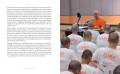
When later in life he met Khun Yai Ajahn he learned of the three levels of life’s goals and became further motivated by the realization that all human beings are prisoners on ‘Death Row’, this knowled
The text discusses a man's journey after meeting Khun Yai Ajahn, discovering life’s goals, and understanding that humans are prisoners on 'Death Row.' He learns that sharing knowledge can illuminate t
14
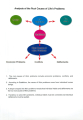
Analysis of the Root Causes of Life’s Problems
Analysis of the Root Causes of Life’s Problems
The Root Causes of Life’s Problems
Economic Problems Conflicts Defilements
Buddhism
The Individual
The Mind
Habits
Root Causes of Life’s Problems
This text discusses the analysis of life’s problems through a Buddhist lens, identifying economic issues, conflicts, and personal defilements as root causes. It asserts that these problems originate f

61
Building Merit through Support in Buddhism
Support one another in achieving merit! While you are still young, use that youthful energy to support the work of Buddhism. Make a wish for your good work to bring you good merit.
The more determin
This text discusses the significance of supporting one another in achieving merit within Buddhism. It emphasizes using youthful energy for good deeds and highlights that determination influences the a
125
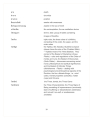
Understanding Key Buddhist Concepts
"Fools" (palay): spiritually defective people. A fool is someone wicked, weak, or feeble in a moral sense. His discretion is faulty, not knowing right from wrong, good from bad. A fool is one who give
This content delves into various Buddhist concepts such as 'fools'—spiritually defective individuals whose actions reflect moral weakness. It explains that heaven in Buddhism comprises six levels prov
19
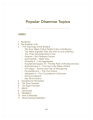
Understanding Buddhism: Key Concepts and Texts
death
chronicle
position
awake with awareness
awake in the sea of merit
fire contemplation; fire as meditation device
shrine; altar; group of tables containing images of Buddha
triple robe; the three
This text delves into crucial Buddhist principles including the Tipitaka, which is a comprehensive scripture forming the foundation of Buddhist teachings. It encompasses three baskets: Vinaya Pitaka,
69
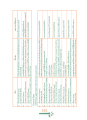
Popular Dhamma Topics
Popular Dhamma Topics
INDEX
1. Buddhism
2. The Buddha’s Life
3. The Teachings of the Buddha
- The Four Noble Truths (Noble Truths of Suffering)
- The Noble Eightfold Path (the Path to end suffe
This page provides an index of popular Dhamma topics within Buddhism. It covers key concepts such as the Buddha's life, core teachings like the Four Noble Truths and the Noble Eightfold Path, and esse
103
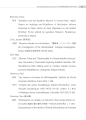
Various Buddhist Stories
Here is the extracted text from the image:
1. The Story of Many Monks
2. The Story of a Group of Bad Ascetics
3. The Disciples of Non-Buddhist Teachers
4. On Shr**d the Downward Course.)
5. The Story
This collection features various tales from Buddhist teachings, including the stories of many monks, ascetics, and important figures such as Old Brahma and King Passand of Kosala. Each story offers in
33
Exploring Buddhist Texts and Influence
Bernhard, Franz.
1970 "Gåndhārī and the Buddhist Mission in Central Asia." Ánjali: Papers on Indology and Buddhism: A Felicitation Volume Presented to Oliver Hector de Alwis Wijesekera on His Sixtieth
This collection of works explores the significant contributions to Buddhist scholarship, including analyses of the Gåndhārī texts, the investigation of the Därșanatika, and the characteristics of the

4
Annotated Translation of the Samayabhedaparacanacakra into Thai
An Annotated Translation of the Samayabhedaparacanacakra into Thai (2)
Maythee PIATAKEERDHAM
Abstract
The Samayabhedaparacanacakra, composed by the Sarvāstivādin elder Vasumitra, exists today in
บทความนี้เป็นการแปลภาษาไทยของ Samayabhedaparacanacakra ที่เขียนโดยพระเถระ Vasumitra ซึ่งแสดงถึงประเพณีสำคัญเกี่ยวกับวันพระพุทธเจ้าปรินิพพาน วันแยกทางครั้งแรกและสาเหตุ รวมถึงนิกายพุทธและหลักปรัชญาต่างๆ

5
การแปลเชิงอรรถของ Samayabhedoparacanacakra สู่ภาษาไทย
96
ธรรมธรรม
วัดสาขาวิชาการทางพระพุทธศาสนา ปีที่ 4 ฉบับที่ 1 (ฉบับรวมเล่มที่ 6) 2561
An Annotated Translation of the
Samayabhedoparacanacakra into Thai (3)
Maythee Pitakteeeradham
Abstra
บทความนี้นำเสนอการแปลเชิงอรรถของ Samayabhedoparacanacakra โดย Maythee Pitakteeeradham ซึ่งเป็นส่วนที่สามของการแปลเป็นภาษาไทย เนื้อหาพูดถึงประเพณีสำคัญเกี่ยวกับวันปรินิพพานของพระพุทธเจ้าและการแตกแยกครั
5
The Shift in Enlightenment Concept in Prajñāpāramitā Sūtras
As demonstrated, the Prajñāpāramitā Sūtras changed a concept of enlightenment from "adapting a monastic lifestyle and practicing meditation extremely" to "accumulating good karma in daily life." This
The Prajñāpāramitā Sūtras redefined the concept of enlightenment in Buddhism, moving away from the traditional focus on monastic practices and extreme meditation. Instead, it emphasized the importance
4
Mahāyāna Buddhism: Reasons for Diversity in the Buddha’s Teachings (4)
ธรรมนิธ ววารสารวารสารวิชาการทางพระพุทธศาสนา
ปีที่ 7 ฉบับที่ 2 (ฉบับวันที่ 13) ปี 2564
**Mahāyāna Buddhism: Reasons for Diversity in the Buddha’s Teachings (4)**
Sasaki SHIZUKA
Phramaha Pongsak THAN
บทความนี้สำรวจถึงการเปลี่ยนแปลงแนวคิดการบรรลุธรรมในพระพุทธศาสนามหายานซึ่งขึ้นอยู่กับพระธรรมคำสอนใน *ปรัชญาปารมิตา* โดยเน้นการสะสมบุญในชีวิตประจำวันแทนการเป็นนักบวช การศึกษาความหมายของสุญตาจะช่วยให้ผู้
30
The Four Positions of Catuskoti in Mahāyāna Buddhism
Ruegg, David Seyfort.
1977 The use of the four positions of the Catuskoti and the problem of the description of reality in Māhāyana Buddhism. Journal of Indian Philosophy Vol.5: 1–171. cited in Wester
This text examines the use of the four positions of the Catuskoti in Mahāyāna Buddhism and its significance in the understanding of reality. The philosophical underpinnings of Nāgārjuna's Madhyamaka a
3
Garudhamma 8: Exploring Gender Issues in Buddhism
Garudhamma 8
What did the Lord Buddha Establish?
Wilaiporn SUCHARITTHAMMAKUL
Abstract
This paper deals with the Buddhist outlook on gender issues. Contemporary feminists have extrapolated moder
This paper examines the Buddhist perspective on gender issues, particularly the eight garudhamma, which have been contested in modern debates around gender equality. It investigates whether these teac
15
Understanding the Dhammacakka Pavattana Sutta
be practised by anyone, giving access to the highest attain- ments — even attainments on a par with that of the Lord Buddha himself.
That the Buddha was able not only to understand Dhamma teachings, b
The Dhammacakka Pavattana Sutta serves as the foundational teaching of Buddhism, delivered by the Buddha to the group of five monks. It encapsulates essential principles that are crucial for anyone wi
24
The Path of Self-Mortification in Buddhism
2. The Path of Self-Mortification
According to the Buddha, the practice of self-mortification [attakilamathānuyoga] is fruitless. He said that it is not a practice in keeping with the tenets of Buddhi
In Buddhism, the practice of self-mortification is deemed fruitless by the Buddha. He elucidates that these practices, such as lying on thorns and severe fasting, do not genuinely rid individuals of d
103
The Noble Eightfold Path and Buddhist Sainthood
fold Path diligently to the extent they are prepared to lay down their life for their practice, have the chance to uproot craving from the mind by transcendental extinction — by attaining the various
This text discusses the profound dedication of practitioners of the Noble Eightfold Path, illustrating how some are willing to sacrifice their lives for their spiritual journey. It highlights notable
220
Exploring the Path to Enlightenment in Buddhism
101; enlightenment mechanism, chanting, Dhammacakkapavattana explained by Dhammakaya 111; Sutta 10-11, 209-16 knowledge arising to reach enlightenment 140-1; practice 94, metaphors: dog and lion 94; g
This text delves into various aspects of Buddhism, focusing on the mechanisms of enlightenment through chanting and the Dhammacakkapavattana Sutta. The practices necessary for attaining enlightenment
252
Appendix F: How to Meditate
Appendix F: How to Meditate
Meditation is a state of ease, inner peace and happiness that we can bring into being, ourselves. It is a practice recommended by Buddhism for happiness, non-recklessness,
Meditation is a practice for achieving ease, inner peace, and happiness as taught in Buddhism. This technique, by Phramonkothempuni, begins with respecting the Triple Gem and taking precepts, followed